



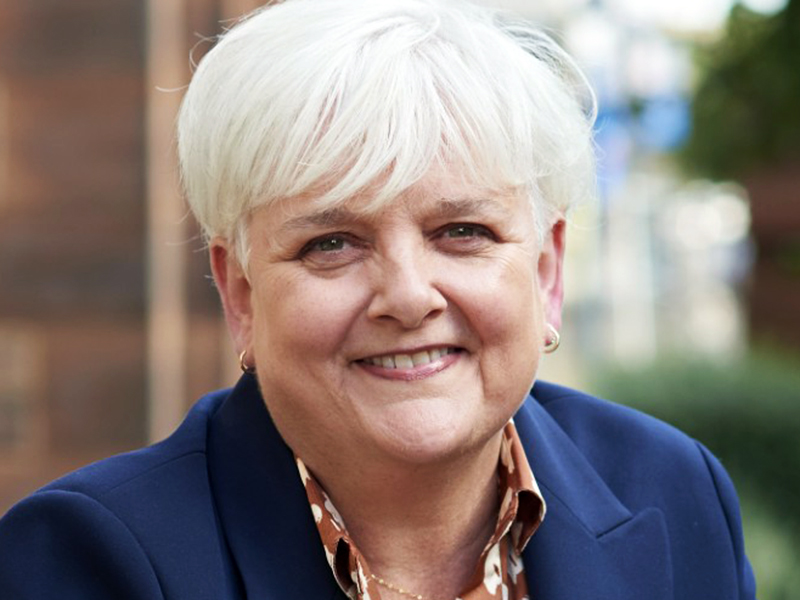
Professor Angela O’Hagan on the newly published State of the Nation report from the Scottish Human Rights Commission
The State of the Nation is the Scottish Human Rights Commission’s (SHRC) annual snapshot of how human rights are being realised across Scotland.
This year, we are looking at the economic, social and cultural (ESC) rights that underpin the daily lives of people across Scotland. We all have these rights – to fair work conditions, to an adequate standard of living, and to the highest attainable standard of physical and mental health. These rights underpin our access to services, food and leisure. They provide the framework for a safety net that every one of us can depend on.
But, as this report demonstrates, for many people the reality is that these rights are out of reach. At the SHRC, we see the daily challenges people face; to afford food, housing and fuel, or to access essential services.
There is no doubt that people are struggling. In many cases, that struggle turns to anger. In some, it leads to political unrest. In Scotland, and globally, we are seeing those very real frustrations expressed as tensions within and between our communities. When people are not seeing improvements in their living conditions, there are some voices that would suggest human rights themselves, or even the rights of others, are the cause of these challenges.
But human rights in Scotland are all the more important because of these challenges. More than ever, we need to protect and uphold the framework that obliges public authorities - who are duty bearers - to act in a way that protects and upholds the rights of people in Scotland. These rights are non-negotiable; that means they are for everyone, even when times are tough. The surest route to improve people’s lives, to reduce frustration and anger and to ensure our communities can be cohesive is to make these rights a reality.
This report is a snapshot in time that describes everyday life through the lens of the human rights legal framework. It spotlights ten areas in Scotland where rights are not being fully realised, including:
- People across Scotland are facing a housing crisis, with many unable to access safe, affordable and adequate housing.
- People in Scotland are unable to afford basic daily essentials that keep us safe and warm.
- People in Scotland cannot access or afford healthy food and are hungry or poorly nourished.
Economic, social and cultural rights do not stand alone, separate from other legal requirements or ideas of how to live. They interact with one another in our everyday lives. We need affordable food and electricity to realise our right to health, and for disabled people and others to not face the choice of ‘eat or heat’. If we are not healthy, we cannot full enjoy our rights to education, work or cultural activities. These interactions exist for all of us but in different ways.
We are very grateful to Shamus, Nada, Derek and Anne: rights holders who so generously shared their stories to illustrate what economic, social and cultural rights look like in their daily lives.
These stories, alongside the SHRC’s analysis of the report’s ten example aspects of ESC rights, highlight a number of areas where the state - the Scottish Government and public bodies - must do more to remedy past and current failures to realise rights. We want MSPs, MPs, councillors and other decision makers to read our State of the Nation report and take action. This means working with and for rights holders to ensure that realising human rights standards are at the core of decisions about legislation, budgeting, policy, service design and practice.
The human rights framework belongs to us all. Some of those rights are protected under UK law by the Human Rights Act 1998, like our freedom of expression and protection from torture. Others, such the economic, social and cultural rights covered by this report, are set out in treaties which have been ratified by the UK and are no less legally binding. The SHRC urges duty-bearers to take this report as a call to action to progress better services and outcomes, using it a framework to meet Scotland’s obligations in international law.
This is a collective challenge. As a commission, the members of the SHRC are united in our role; to speak up and challenge rights denials, and to defend the human rights of the people we serve; and to use our unique platform as Scotland’s national human rights Institution to call out injustice and to offer advice and support to build on the fragile progress around us.
Read the 2025 State of the Nation report at www.scottishhumanrights.com. Available as a PDF, an accessible Word document, an Easy Read and in BSL.
Professor Angela O’Hagan is chair of the Scottish Human Rights Commission (SHRC).