


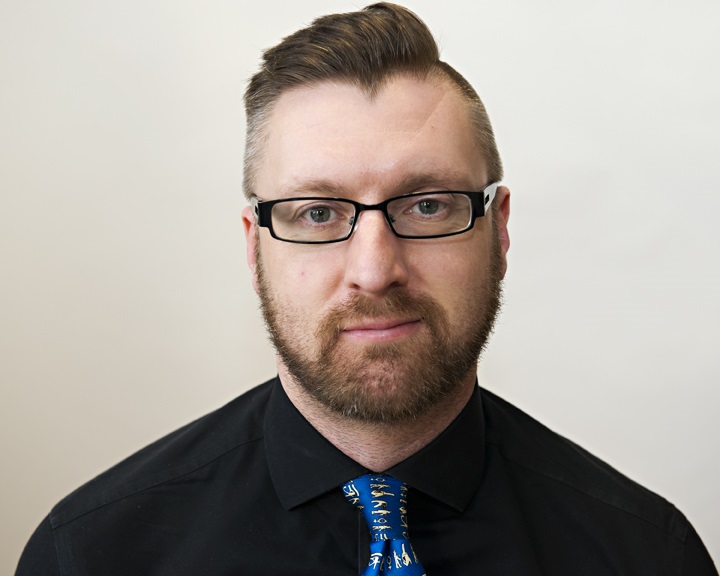
Duncan Thorp on the need for community cohesion
Building bridges in our local communities has never been a more urgent mission.
With a perception of increasing divisions and hateful rhetoric, it’s charities, social enterprises and community groups that are needed now more than ever.
Much of the recent local conflicts that we’ve seen in the media are happening in England and Wales but Scotland isn’t immune from toxic political debate and protest.
Particularly in an age of borderless social networks, deepfakes, confusing political allegiances and an imminent Holyrood election, the usual debates are set to intensify.
Of course, many of these issues are not new and are widely known, based around class, racial, religious and other social and cultural factors.
Understandably many people have strong political views and it’s often difficult to focus less on personalities and political parties and more on policies and systems. That’s our big challenge.
Certainly, it’s not helped by the political and media culture of "the campaign battlefield", “political casualties” and other inflammatory language, that sets us up for conflict.
Right now, we urgently need community cohesion, an emerging policy theme gaining traction as the Holyrood election approaches.
The Scottish Government recently announced £300,000 to support projects that build strong and resilient communities. We hope this fund is increased to reflect the challenge.
This is where community-owned organisations, charities and social enterprises can and must play a leading role.
They’re already anchored in local areas, engaging directly with the hardest to reach, empowering individuals and families and preventing and fixing a range of social and environmental issues.
We need positive, engaging places to really listen to the needs, fears, experiences and indeed wisdom of others.
Community forums that bring opposing groups of people together, aiming for consensus to tackle issues that affect everyone, including cultural understanding, roads and pavements, anti-social behaviour and new housing, is essential.
This must also mean giving a real platform to voices that are lost in political debates due to poverty, age or disability, to women and girls and LGBTIQ+ people.
Rather than top-down policy with standard consultations, decision-making power for ordinary people must be at the very core, it must be the starting point.
Who are the experts on the NHS? Patients and employees. Who are the experts in our railways? Commuters and workers. Who are the experts in refuse collection? Well, all of us. People know what works and what doesn’t and what changes are needed.
There are already real, practical examples of how to do this.
The Citizens' Assembly of Scotland was one such example but other solutions are local, with innovative projects like the Dunfermline New City Assembly.
In addition, the Scottish Parliament has been using people’s panels to solve big issues, a rarity in any parliament. The challenge is how to extend and embed these on a permanent basis.
The clear outcome must be to bring people together to solve our collective social and environmental challenges, within positive, constructive frameworks, not to fragment and divide.
Solving conflict in our local communities all boils down to people knowing that their views and experiences actually matter and that they’re being listened to. We need to reimagine what this lived experience really means.
We must also do better at telling the positive stories of people doing good things, that are actually the daily norm across Scotland’s communities and beyond.
In an age of inflammatory political rhetoric and misinformation, these stories and narratives have far more power to change the world.
It’s currently the season of goodwill, maybe we can keep that frame of mind as we emerge into election year in 2026.
Duncan Thorp is policy and public affairs manager for Social Enterprise Scotland.